
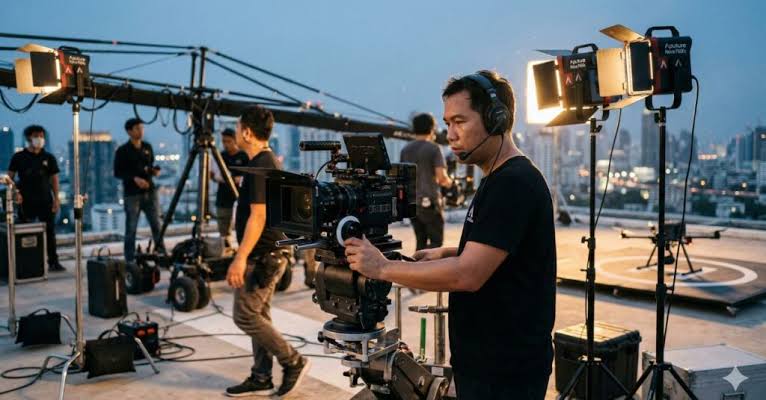
Film production is where stories come to life. After weeks or even months of planning during pre-production, the production stage marks the moment when cameras begin rolling, actors perform, and every department collaborates to capture the footage that will eventually become a finished film.
For many people, film production is what they imagine when they think about filmmaking. However, professional production is far more than simply recording scenes. It is a carefully coordinated operation involving directors, producers, cinematographers, lighting technicians, sound engineers, production designers, and dozens of other specialists working together under tight schedules and budgets.
Whether producing a feature film, television commercial, documentary, branded content, or music video, a successful production depends on organization, communication, and teamwork. In this guide, we’ll explore the production phase in detail, explaining how professional film productions operate and why experienced production support is essential—especially for international productions filming in Indonesia.
What Is Film Production?
Film production is the phase of filmmaking where all planned scenes are physically captured on camera. It follows pre-production and comes before post-production.
During production, the creative vision developed in earlier planning stages becomes reality. Every shot, performance, sound recording, and camera movement is executed according to the shooting schedule prepared during pre-production.
Because production involves the largest number of people and resources working simultaneously, it is also the most expensive stage of filmmaking. Every hour on set matters, making efficiency and preparation essential.
Why the Production Stage Is So Important
Production is where months of preparation are tested in real-world conditions. Every department must work together to keep the project on schedule while maintaining creative quality.
A well-managed production allows filmmakers to:
- Capture high-quality footage efficiently
- Stay within budget
- Maintain a consistent visual style
- Minimize production delays
- Ensure crew safety
- Adapt to unexpected challenges
- Deliver the director’s creative vision
Even small disruptions during production can have significant financial and scheduling consequences, which is why experienced production management is critical.
What Happens During Film Production?
The production stage consists of much more than actors performing in front of a camera. Each shooting day follows a structured workflow designed to maximize productivity and minimize downtime.
A typical production day includes:
- Crew arrival and equipment setup
- Lighting installation
- Camera preparation
- Sound checks
- Makeup and wardrobe
- Set decoration
- Blocking rehearsals
- Scene rehearsals
- Principal photography
- Playback review
- Equipment wrap
- Data backup
Every department follows a carefully coordinated schedule to ensure that filming progresses smoothly.
The Role of the Producer During Production
While the director focuses on storytelling, the producer oversees the operational side of the production.
Key responsibilities include:
- Managing the production budget
- Supervising daily operations
- Coordinating department heads
- Monitoring production progress
- Solving logistical challenges
- Ensuring schedule efficiency
- Managing client communications
The producer acts as the bridge between creative ambitions and practical execution.
The Director: Leading the Creative Vision
The director is responsible for translating the screenplay into compelling visual storytelling.
During production, the director works closely with actors and department heads to ensure every scene reflects the intended emotion and narrative.
Responsibilities include:
- Directing performances
- Approving camera angles
- Guiding visual storytelling
- Working with the cinematographer
- Reviewing takes
- Maintaining creative consistency
The director’s decisions influence every frame of the production.
Cinematography: Capturing the Story
The cinematography department transforms ideas into cinematic images.
Led by the Director of Photography (DP), the camera team carefully selects lenses, framing, movement, and lighting to support the story.
Their responsibilities include:
- Camera placement
- Lens selection
- Camera movement
- Composition
- Exposure control
- Focus management
- Image quality
Modern productions may utilize multiple camera systems depending on the complexity of the project.
Common equipment includes:
- Digital cinema cameras
- Prime and zoom lenses
- Camera cranes
- Gimbals
- Dollies
- Sliders
- Drones
- Remote camera systems
Each tool is selected based on the creative and technical requirements of the production.
Lighting: Creating Mood and Atmosphere
Lighting is one of the most influential elements of visual storytelling.
Professional lighting does more than illuminate a scene—it shapes mood, directs audience attention, and creates depth.
Lighting teams work under the guidance of the gaffer and Director of Photography to achieve the desired cinematic look.
Lighting setups often include:
- LED panels
- Fresnel fixtures
- HMI lights
- Softboxes
- Diffusion frames
- Reflectors
- Flags
- Negative fill
Lighting conditions may change throughout the day, requiring continuous adjustments to maintain visual consistency.
Production Sound: Recording Every Detail
Audiences often forgive imperfect visuals, but poor audio can quickly diminish the quality of a production.
The sound department records:
- Dialogue
- Ambient sound
- Natural environmental audio
- Room tone
- Reference sound
Professional productions rely on boom operators and wireless microphones to ensure clean, intelligible recordings while minimizing background noise.
Art Department and Production Design
The art department creates the visual environment that supports the story.
Production designers oversee:
- Set decoration
- Props
- Furniture
- Signage
- Graphics
- Color palettes
- Practical effects
Every object appearing on screen is intentionally selected to reinforce the film’s visual identity.
Managing Actors and Performances
Actors are central to every narrative production, but successful performances depend on careful coordination.
During filming, actors work closely with:
- The director
- Script supervisors
- Makeup artists
- Costume designers
- Hair stylists
- Assistant directors
Multiple takes may be recorded from different camera angles, allowing editors greater flexibility during post-production.
The Importance of the Assistant Director
The Assistant Director (AD) keeps production running according to schedule.
Responsibilities include:
- Managing shooting schedules
- Coordinating departments
- Organizing call times
- Maintaining set discipline
- Tracking production progress
- Communicating schedule changes
Without effective assistant directing, productions can quickly fall behind schedule.
Daily Production Workflow
Every shooting day begins long before cameras roll.
A typical workflow includes:
Morning Setup
Crew members unload equipment, build lighting setups, prepare cameras, and dress the set.
Technical Rehearsals
Actors rehearse movements while camera, lighting, and sound departments finalize technical adjustments.
Principal Photography
Scenes are filmed according to the daily call sheet.
Each shot may require multiple takes from different angles before the director approves it.
Playback Review
Directors and cinematographers review footage to confirm performance and technical quality.
Company Move
If multiple locations are scheduled, equipment and crew relocate efficiently to the next filming site.
Wrap
At the end of the day, equipment is packed, footage is backed up, batteries are charged, and production reports are completed.
Challenges During Film Production
No production proceeds exactly as planned. Professional crews must adapt quickly while protecting the schedule and budget.
Common challenges include:
Weather
Outdoor productions may face rain, wind, or changing light conditions. Flexible scheduling and contingency plans help minimize disruptions.
Equipment Issues
Technical failures can delay filming if backup equipment is unavailable. Professional productions always prepare redundancies for critical gear.
Time Constraints
Shooting days are limited, and every delay affects subsequent scenes. Efficient coordination keeps the production moving.
Location Restrictions
Public spaces, heritage sites, and protected areas often have specific rules regarding access, operating hours, and equipment usage.
Talent Availability
Actors, extras, and specialized crew may have limited availability, making careful scheduling essential.
Film Production in Indonesia
Indonesia has become an increasingly popular destination for international productions thanks to its extraordinary variety of landscapes and experienced local professionals.
Filmmakers can shoot in:
- Tropical islands
- Modern urban centers
- Dense rainforests
- Volcanic landscapes
- Traditional villages
- Historic temples
- Coastal cliffs
- Remote beaches
However, productions often involve complex logistics across multiple islands and regions. Transportation, accommodation, equipment movement, permits, and local coordination all require careful management.
Working with an experienced local production company helps ensure that international productions remain efficient, compliant, and focused on creative objectives.
Why Professional Production Support Matters
The production stage involves hundreds of moving parts that must work together seamlessly.
Professional production support provides:
- Experienced producers
- Local production coordinators
- Skilled camera and lighting crews
- Equipment sourcing
- Permit management
- Transportation logistics
- Accommodation planning
- Location management
- Local fixers
- Government liaison
- Safety supervision
With a reliable production partner, filmmakers can concentrate on directing and storytelling while experienced professionals manage operational complexities.
Best Practices for a Successful Production
Professional productions consistently follow these principles:
- Follow the production schedule while remaining flexible.
- Hold clear communication between every department.
- Conduct safety briefings before filming.
- Back up footage multiple times each day.
- Monitor weather and environmental conditions.
- Respect local communities and filming locations.
- Prepare contingency plans for equipment or logistical issues.
- Review footage daily to identify potential problems early.
These practices help maintain quality while reducing the risk of delays and costly reshoots.
Conclusion
Film production is the heart of the filmmaking process. It is where months of planning become reality, and where creativity, technical expertise, and teamwork come together to capture compelling visual stories.
From directing performances and operating cameras to managing lighting, sound, logistics, and daily schedules, every department contributes to the success of a production. Because this stage is both resource-intensive and time-sensitive, efficient coordination is essential.
For international filmmakers shooting in Indonesia, partnering with an experienced local production company offers significant advantages. With access to skilled crews, production support, location expertise, and logistical coordination, filmmakers can navigate the unique challenges of filming across Indonesia while focusing on what matters most—bringing their creative vision to the screen.